12 Best Yoga Poses for Glute Strength and Activation
Introduction
A healthy and injury-free yoga practice requires strong, flexible glutes. This primary muscle group is essential for producing power in standing and transitional poses, supporting the spine, and stabilizing the pelvis. However, it is frequently misinterpreted or underused. You will learn specific methods for activating and releasing the gluteal muscles in this instructional series, which will improve your range of motion, strength, and stability.
Why Is Glute Strength Important?
Your glutes are frequently referred to as the motor if your body were an automobile. Your glutes are engaged whether you’re swinging, squatting, or jumping; if they’re not, your lower back will be exposed to needless strain.
Strong glutes are important for your knees and lower back in addition to improving your physical condition. For good reason, the glutes—more especially, the gluteus maximus—are the biggest muscles in your body. They serve a variety of purposes beyond simply making your trousers fit.
You will unnecessarily strain your lower back and knees if you lack glute strength. This explains why glute strength is a common challenge for those with knee or low back disorders. However, rather than focusing on the root cause of the issue, individuals frequently examine its manifestation. Therefore, rather than focusing on the glutes, patients can consider treating their knees or low back directly, maybe even going so far as to have surgery.
Although increasing your gluteal strength and mobility does not ensure that you won’t sustain any injuries to your knees or low back, it does considerably lower your chance of doing so and treat the underlying reasons for these problems (a lack of strength and mobility).
Best yoga poses for glute strength
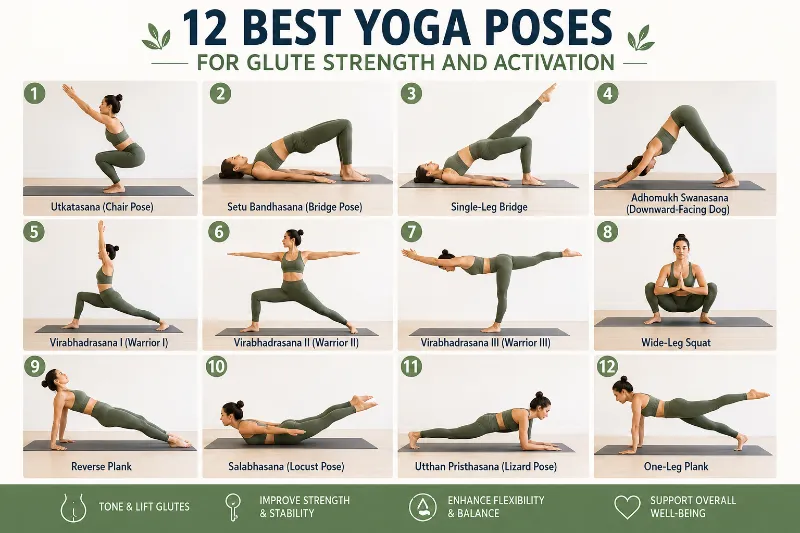
Utkatasana (Chair Pose)
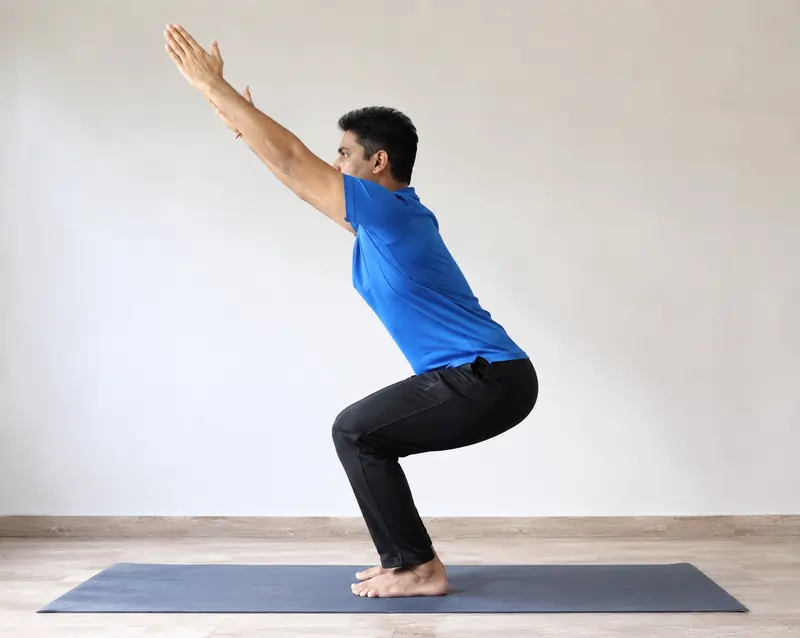
- Chair Pose is a powerful yoga pose for the glutes that helps strengthen and elevate the buttocks.
- Put your feet hip-width apart and stand tall to execute it. Push your hips back slowly, as though you were seated on an imaginary chair.
- Lift your arms straight above after lowering your knees until your thighs are parallel to the floor.
- To enhance the stimulation of your thighs and glutes, shift your weight into your heels and raise your toes slightly off the ground.
- Return to standing after holding for 30 to 60 seconds.
Setu Bandhasana (Bridge Pose)
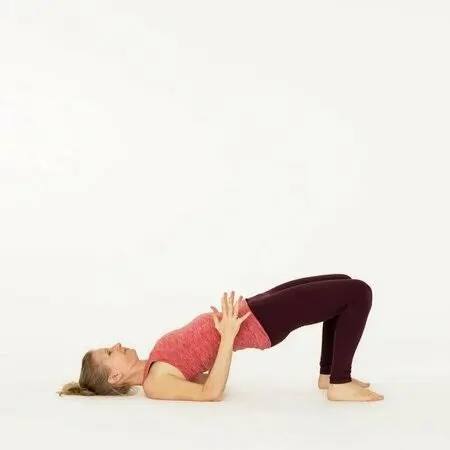
- Bridge Pose promotes the decrease of abdominal fat in addition to shaping and lifting the glutes.
- Bend your knees and place your feet flat on the ground, hip-width apart, while lying on your back.
- Keep your arms beside your body.
- Take a breath, raise your hips, contract your glutes, and draw a diagonal line from your shoulders to your knees.
- Repeat after holding for 30 to 60 seconds.
Single-Leg Bridge
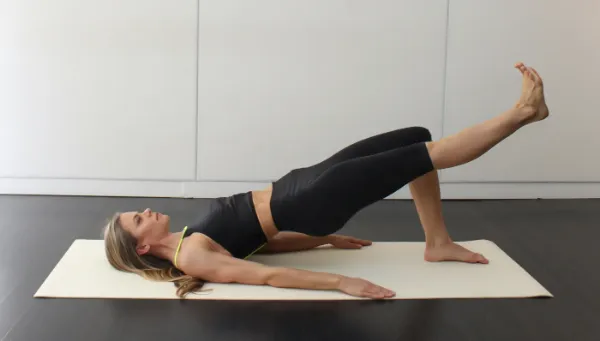
- This pose increases the focus on one glute at a time and is a more complex version of the Bridge Pose.
- Keeping your hips level, raise one leg straight up toward the ceiling from the Bridge Pose.
- To keep stability and lift, contract the supporting leg’s glute.
- After ten to fifteen breaths on each side, swap legs.
- This position improves balance and strengthens the glutes.
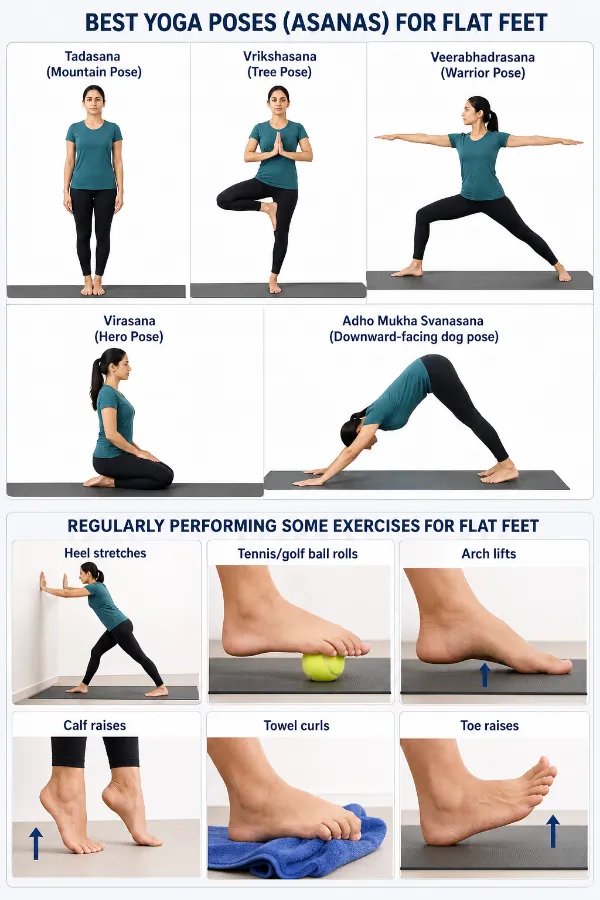
Adhomukh Swanasana (Downward-Facing Dog)
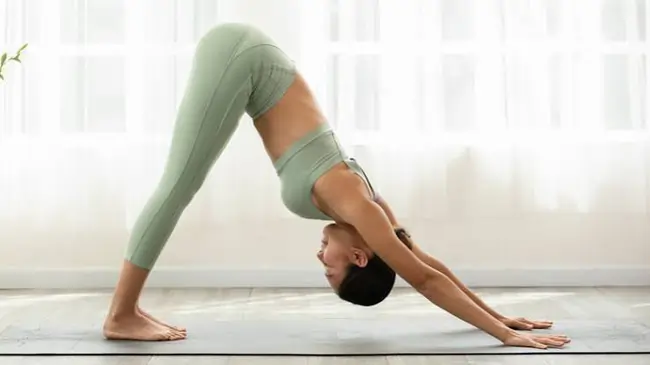
- When performed correctly, the downward-facing dog is a full-body pose that effectively engages the glutes.
- Press your palms into the mat and begin on all fours. Raise your hips to the sky while tucking your toes, lifting your knees, and extending your legs.
- Stretch your hips upward and lengthen your spine.
- To tone the lower back, improve flexibility, and strengthen the glutes, hold for one to three minutes.
Virabhadrasana I (Warrior I)
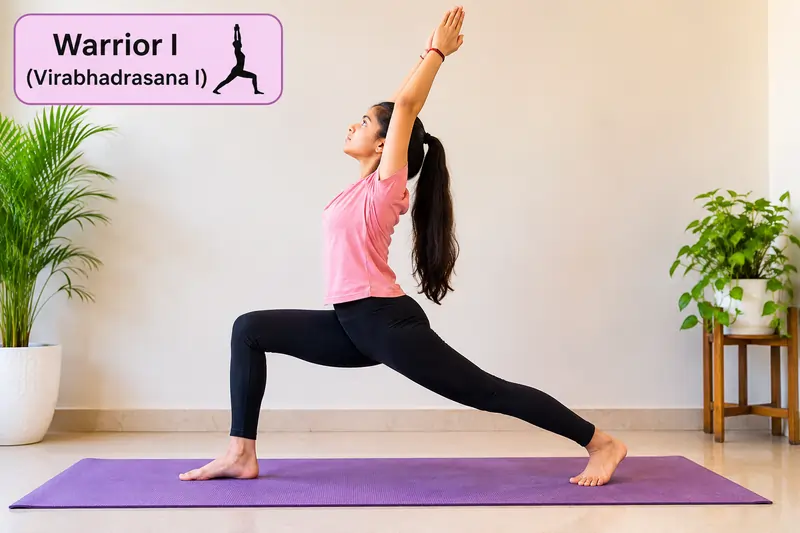
- The glute muscles are strengthened and activated in this pose.
- Step back one leg after standing up, then bend your front knee to a 90-degree angle.
- Keep your arms elevated aloft, palms facing inward, and your rear leg outstretched.
- Using your glutes, shift your weight to the front leg.
- For five to ten breaths, hold. Warrior I stretches the thighs and glutes and improves balance.
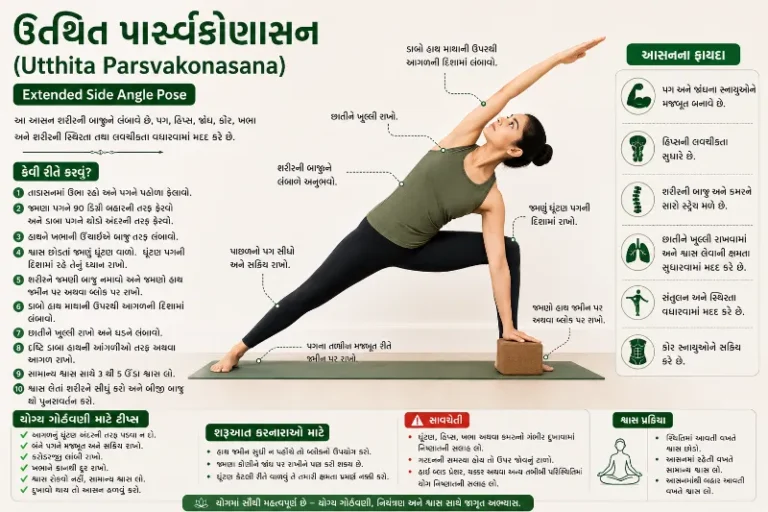
Virabhadrasana II (Warrior II)
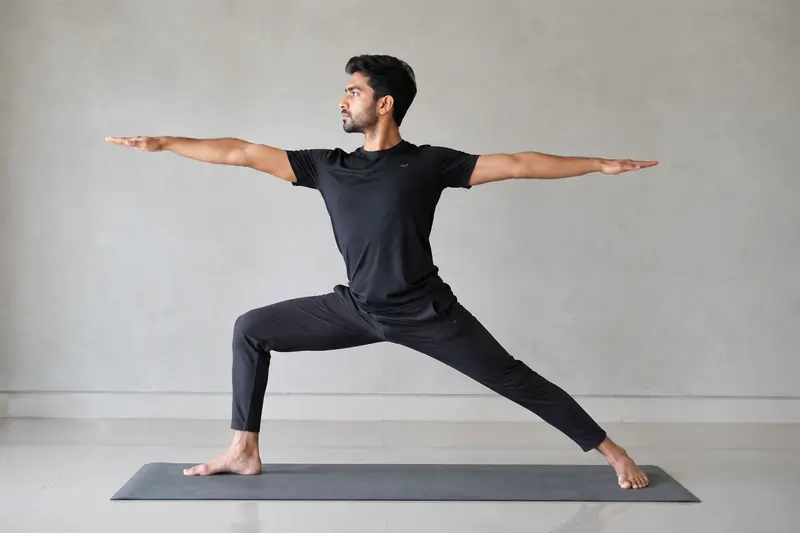
- Warrior II is a fundamental yoga pose that increases lower-body flexibility and strengthens the glutes.
- Take a large step back from a standing posture and bend your front knee such that it doesn’t pass your toes.
- Look over your front hand, relax your shoulders, and extend both arms parallel to the floor.
- Hold for five to ten breaths. Throughout, your thighs and glutes stay active, which helps create different forms.
- Warrior II, one of the fundamental yoga positions that all beginners should learn, is a great complement to your at-home practice since it increases strength and stability.
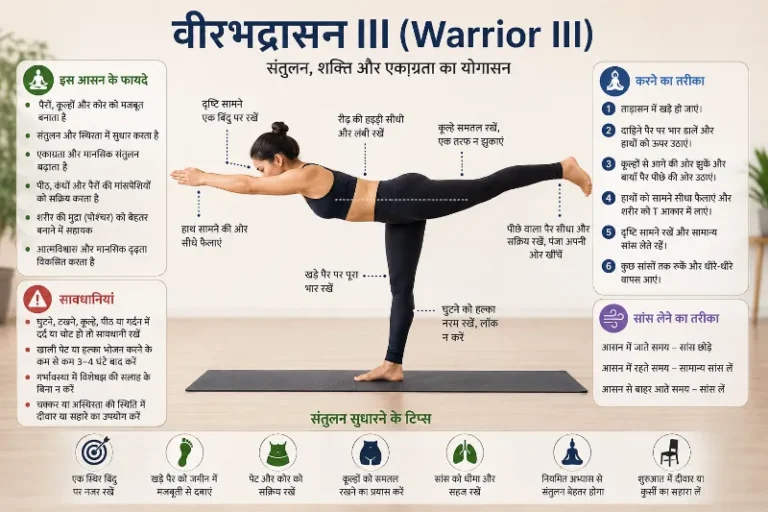
Virabhadrasana III (Warrior III)
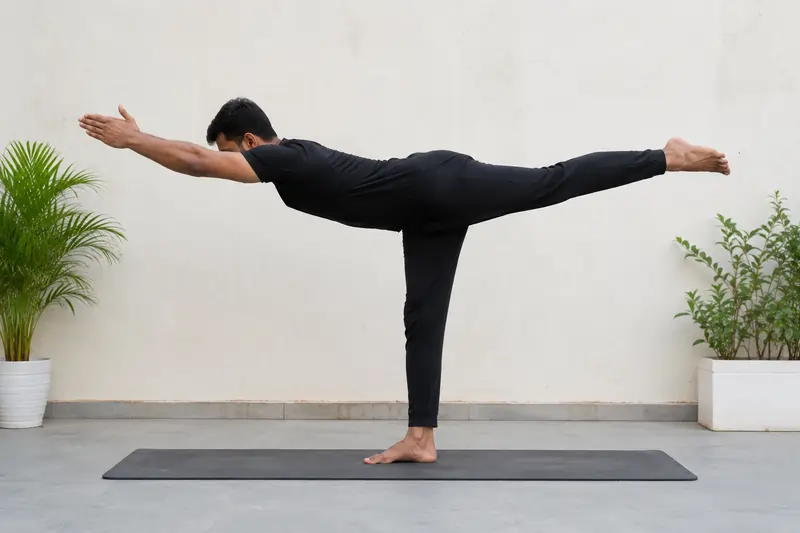
- Warrior III is a difficult exercise for the glutes that requires core strength and balance.
- Raising your back leg and bending your back forward from Warrior I, I will put your body in a straight line from head to heel.
- Bring your palms together at the chest or extend your arms forward.
- For five breaths, contract your core and glutes.
- This position strengthens the glute muscles and increases stability.
Wide-Leg Squat
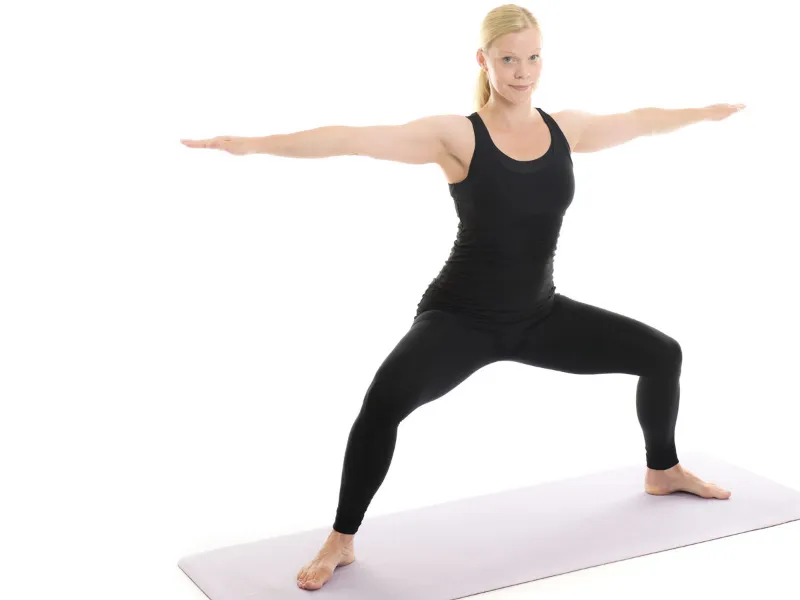
- This yoga pose that focuses on the glutes is excellent for increasing muscular mass and burning fat.
- Toes pointed outward, place your feet wider than shoulder-width.
- Keeping your back straight and your glutes active, lower your hips until your thighs are parallel to the floor.
- Lift your heels a little for an extra challenge. Hold for five to ten breaths.
- Wide squats improve posture and raise the butt by using the middle and lower glutes.
Reverse Plank
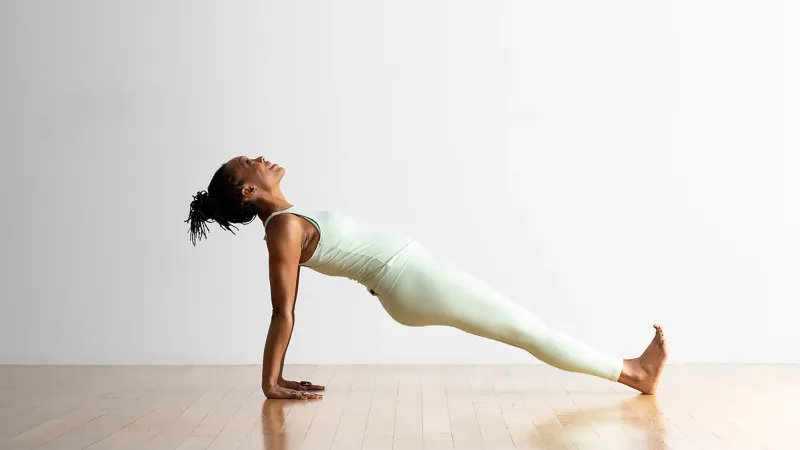
- The lower back and glutes are strengthened by this pose.
- With your hands behind you and your fingers pointed toward your heels, take a seat on the mat with your legs outstretched.
- Raise your hips so that your head and feet are in a straight line.
- Engage your glutes and gently tilt your head back. Hold for five to ten breaths.
- Reverse planking improves body control and tones the butt.
Salabhasana (Locust Pose)

- An excellent position for strengthening the lower back and developing strong glutes.
- With your hands linked and your arms outstretched, lie on your stomach.
- Using your hips and core as the foundation, take a breath and raise your arms, legs, and chest off the ground.
- Hold the position for five to ten breaths while using your glutes.
- This pose improves posture and works the glute muscles deeply.
Utthan Pristhasana (Lizard Pose)
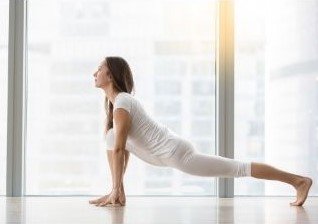
- This pose works the glutes and expands the hips deeply.
- Step your right foot outside your right hand while bending your knee 90 degrees from a plank.
- Let your hips expand as you lower your back knee to the mat.
- Lower yourself onto your forearms for a more thorough stretch.
- Hold.
- Then switch sides.
- Lizard Pose improves glute form and boosts flexibility.
One-Leg Plank
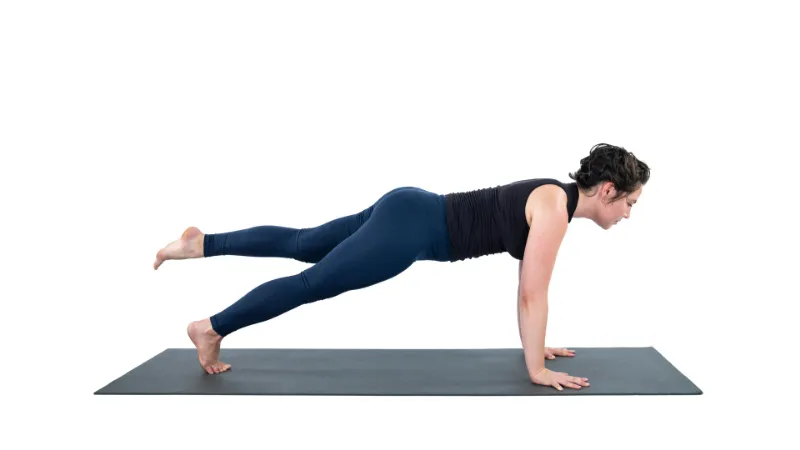
- This form specifically targets the core and glutes.
- Lift one leg straight to hip height while contracting your core from a high plank.
- After holding firmly for five to ten breaths, swap legs.
- This position helps tone and raise your buttocks by challenging your full-body stability and engaging the deep glute muscles.
Precautions for Yoga for Glute Strength
- Yoga routines, including Bridge Pose, Warrior III, Chair Pose, Locust Pose, and single-leg balance poses, will help develop and activate the gluteal muscles.
- The glutes are among the stabilizing muscles that can be strengthened by yoga poses, and Bridge Pose particularly engages the glutes.
- First, warm up your muscles with moderate motions and gentle hip mobility before moving into stronger poses.
- Keep your position correct: When performing standing postures or squats, keep the knees tracking in line with the toes and prevent the knees from folding inward.
- Avoid hyperextending the lower back or raising the hips too much when in Bridge Pose.
- Stop if symptoms worsen: A healthcare provider should be seen if there is persistent or worsening pain, significant weakness, edema, numbness, or loss of function.
FAQs:
How to strengthen glutes with yoga?
Yoga poses like Bridge Pose, Chair Pose, and Locust Pose can help you develop lower body strength and stability. To improve your balance and protect your lower back, these exercises focus on your main hip muscles.
Can yoga tone your glutes?
Yes, yoga can help tone your buttocks, but it’s most effective if you hold deep postures like chair pose, bridge pose, and warrior pose and gently squeeze your muscles.
What are signs of weak glutes?
Poor posture, hip and knee pain, and lower back pain are frequently caused by weak glutes. Other body parts have to put in more effort to help you move when these big muscles are not working properly.
Can weak glutes be fixed?
“To treat weak glutes, you have to do a lot of hip stability exercises,” he states. Exercises involving just one leg are an excellent example.
Will squeezing my buttocks strengthen glutes?
Yes, you can strengthen and activate your glutes by performing an isometric glute squeeze, which involves squeezing your buttocks. Without the need for any equipment, it improves local muscular endurance, strengthens the mind-muscle link, and improves muscle tone.
References:
- Shariat, A., Anastasio, A. T., Soheili, S., & Rostad, M. (2020). Home-based fundamental approach to alleviate low back pain using myofascial release, stretching, and spinal musculature strengthening during the COVID-19 pandemic. Work, 67(1), 11–19. https://doi.org/10.3233/wor-203248
- Düking, P., Sperlich, B., Voigt, L., Van Hooren, B., Zanini, M., & Zinner, C. (2024). ChatGPT-generated training plans for runners are not rated optimal by coaching experts but increase in quality with additional input information. Journal of Sports Science and Medicine, 23(1), 56–72. https://doi.org/10.52082/jssm.2024.56
- Salmons, C. A. (2014). Dance for your life! : TangoFlow!® technique and implications in the treatment of trauma: a mixed-methods empirical study. In Smith ScholarWorks (Smith College). https://scholarworks.smith.edu/theses/1083