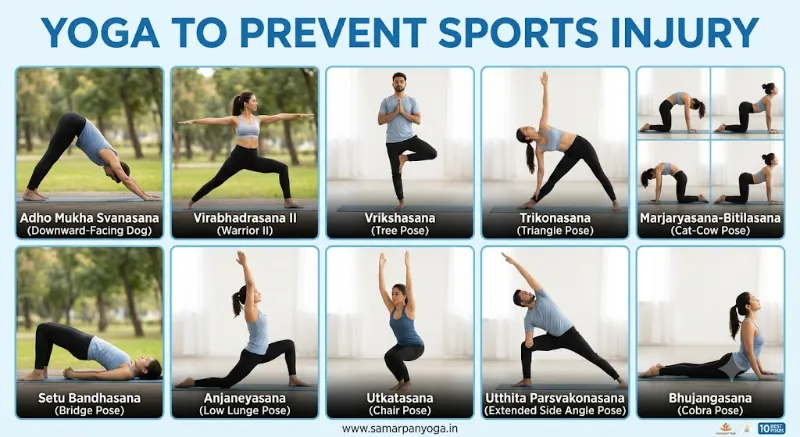
Yoga To Prevent Sports Injury
Introduction
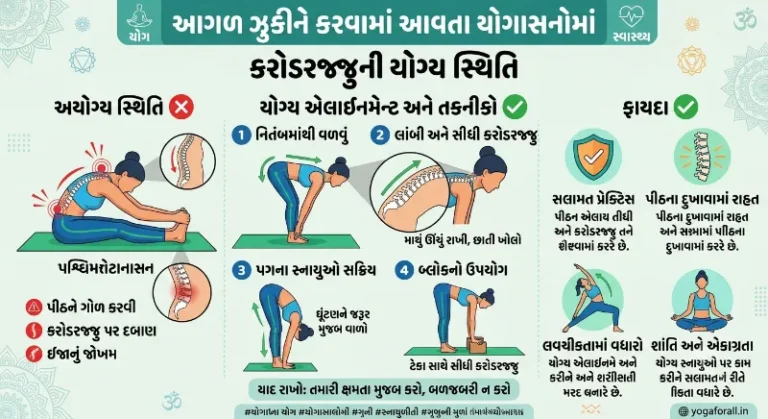
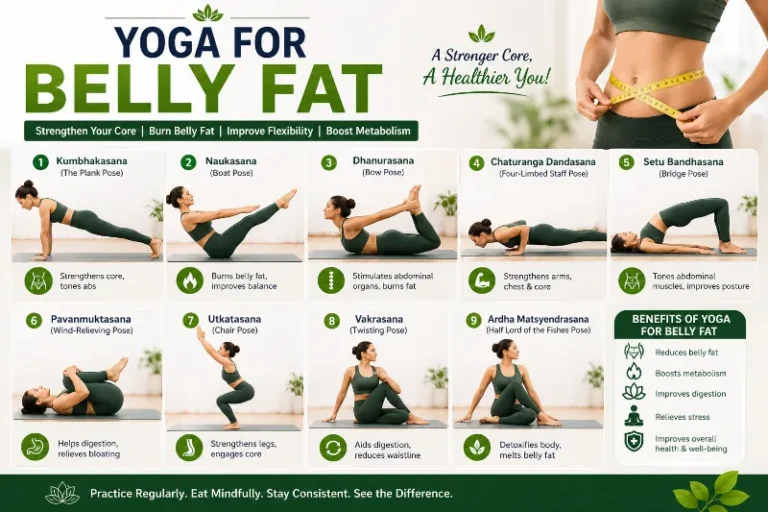
Yoga is becoming another key tool to aid in maintaining fitness, while assisting injury prevention and/or rehabilitation. This is because it promotes both mental and physical health, therefore addressing physical and non-physical aspects of injury.
Yoga can help athletes regain confidence, decrease pain, increase mobility, and restore neuromuscular control. It combines breath, progressive loading, and controlled movement—all of which physical therapists use on a regular basis. Maintaining continuity between clinic visits and on-field return is made easier for coaches and athletes developing long-term plans by using easily accessible equipment like a home gym and digital learning resources.
As a general rule, yoga helps to stretch muscles, strengthen muscles by placing healthy stress on them in different forms, and increase your skeletal range of motion. This can be used to aid rehabilitation from overuse injuries to muscles such as low back pain; however, it can also be used as a physical therapy to help manage pain and correct postural issues caused by musculoskeletal disorders/injuries.
Because balance improves an athlete’s “proprioception,” or knowledge of how their body moves through space, it has been demonstrated to lower an athlete’s risk of injury. More significantly, yoga lowers cortisol levels, a stress hormone that has been connected to a number of negative consequences that delay the healing of injuries.
Many people are encouraged to slow down their movement since moving slowly with the breath also means that you are only moving as quickly as you are breathing.
This definitely varies from person to person in terms of injury healing, and you will need to consult a physiotherapist to determine exactly what you need for your specific condition. If your physiotherapist has suggested yoga, find out how intense it would be for your injury and whether static stretches or more dynamic yoga would be preferable. Next, choose the style that best suits your recovery strategy.
Benefits That Matter Most
Mobility and Flexibility: Yoga methodically works through the body’s main movement chains. Poses that target shoulder mobility, hamstring extensibility, hip flexors, and thoracic rotation directly improve athletic performance and lower the risk of injury. For example, a stiff hip often causes knee and lower back issues upstream.
Neuromuscular Control and Balance: Among the most overlooked advantages of yoga are balance and proprioception, or the body’s awareness of joint position. Ankle sprains, knee injuries, and falls during sports can be prevented by training the neuromuscular system using single-leg standing postures, gradual, controlled transitions, and prolonged holds.
Breathing Efficiency and Stress Recovery: One of the main components of yoga practice is controlled breathing. The use of breath-focused movement to lower the physiological stress response, improve recovery in between sessions, and increase aerobic efficiency is supported by research from the NHS and other clinical bodies; this is especially important for athletes and endurance athletes.
What Does Yoga Actually Do for an Athlete’s Body?
Stability and strength alone are not enough for modern sports. Mobility, balance, joint stability, neuromuscular control, recovery capability, and mental focus are all necessary for athletes.
Regular yoga practice is linked to increased flexibility, better postural alignment, higher breathing efficiency, more body awareness, decreased physiological stress response, and improved movement symmetry, according to National Institutes of Health studies.
Some of the most frequent sports conditions, such as hamstring strains, lower back pain, shoulder overuse injuries, knee overload syndromes, neck stiffness, and pain from muscular imbalances, are directly prevented by these advantages.
It’s a simple mechanism. Movement patterns become ineffective when joints lose their typical range of motion and muscles are overly tight. This eventually puts too much strain on tissues and makes athletes more at risk of injury. Maintaining effective, healthful movement patterns is aided by yoga.
When to Choose Yoga, Physical Therapist, or a Combined Approach
Yoga as a first-line approach:
- Improving overall flexibility in healthy individuals
- Breathing techniques and stress relief
- Wellness maintenance with no injuries
- Recovery sessions between training
Physical therapist as a first-line approach:
- Acute sporting injuries
- Sprained/torn ligaments
- Tendinitis (Rotator Cuff, Patella Tendon, Achilles)
- Postoperative rehab
- Neurological symptoms (Radiating pain, Numbness)
A combined approach delivers the best outcomes for:
- Frozen shoulder (adhesive capsulitis)
- Chronic low back pain
- Knee osteoarthritis
- Sports performance enhancement
- Recurrent neck pain and postural dysfunction
Often the best results can be obtained using yoga and physiotherapy together. A physical therapist will be used initially to assess and treat. Yoga can then be used as a long-term maintenance and preventative tool.
Yoga and Common Injury Sites: What the Evidence Suggests
Low Back Pain:
According to the World Health Organization, one of the main causes of disability in the World is low back pain. Flexibility, stiffness, posture, and core awareness can all be improved with yoga.
But not all back pain conditions are appropriate for yoga. Physiotherapy evaluation is typically necessary for conditions such as disk prolapse, sciatica, spondylolisthesis, and nerve root compression. Without a diagnosis, choosing improper spinal flexion or extension poses can greatly worsen these disorders.
Many people who suffer from knee pain believe that they should either stop moving completely or practice yoga. It’s a more complex reality. Joint mobility, balance training, quadriceps activation, and functional movement patterns can all be enhanced by yoga. However, before introducing yoga, patients with severe osteoarthritis, ligament injuries, and malalignment disorders usually need focused physiotherapy assistance. When combined with physiotherapy-directed strengthening, yoga frequently yields much better results than either method alone.
Shoulder Pain:
Swimmers, players of tennis, golf, and people who spend a lot of time at desks are more likely to get shoulder pain and rotator cuff issues. Yoga can aid with thoracic spine alignment, shoulder mobility, and the release of tight muscles around the shoulder girdle.
However, overstretching a shoulder that is either inflamed or structurally damaged can exacerbate symptoms.
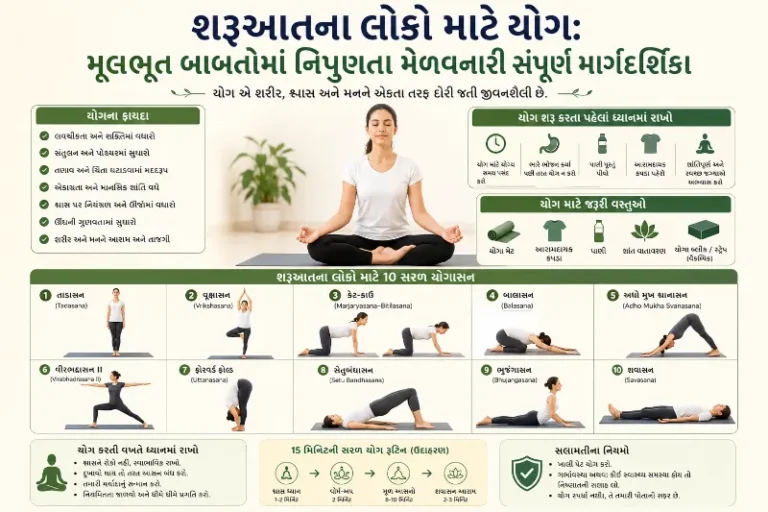
Best Yoga Poses For Yoga To Prevent Sports Injury
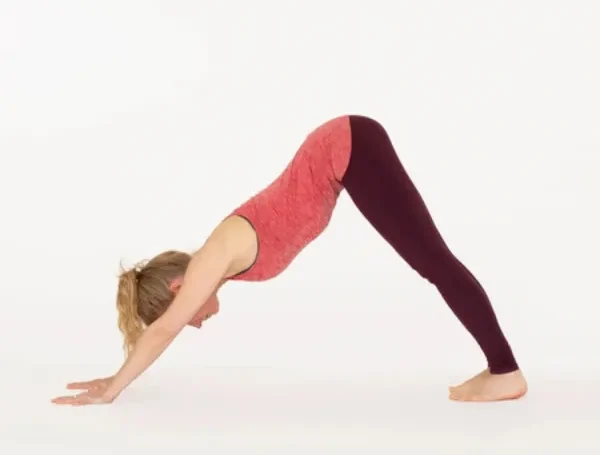
Adho Mukha Svanasana (Downward-Facing Dog)
- Get on your hands and knees, placing your knees beneath your hips and your wrists under your shoulders. Press equally through the palms while spreading your fingers wide.
- As opposed to locking the elbows, maintain a little bend. To stabilize the shoulders and widen the upper back, gently rotate the upper arms outward so that the biceps face slightly forward.
- As you exhale, tuck the toes under and raise your knees off the mat. To create an inverted V shape, raise and lower your hips. At first, keep the knees bent.
- Focus on building length from the wrists through the hips while pressing the floor away with your hands. Avoid collapsing the shoulders as you softly bring the chest toward the thighs.
- If your hamstrings feel tight, keep your knees bent to maintain correct alignment. Maintain a long spine while progressively straightening the legs if flexibility permits. Heels do not have to come into contact with the ground.
- Avoid flaring the ribs by softly drawing the lower abdomen in. In addition to protecting the lower back, this core support maintains the pose’s equilibrium.
- With the neck relaxed, let the head rest freely between the arms. Don’t try to stare forward; instead, focus on the navel or thighs.
- Maintain the position while breathing slowly:
- For beginners, take five to ten breaths.
- 10–20 breaths in the middle
- Advanced: one to three minutes
- Every breath gives the spine length, and every breath out lets the body settle.
- Return to Tabletop or Child’s Pose after bending the knees and gently lowering them to the mat. Before you resume your practice, take a few deep breaths.
Virabhadrasana II (Warrior II)
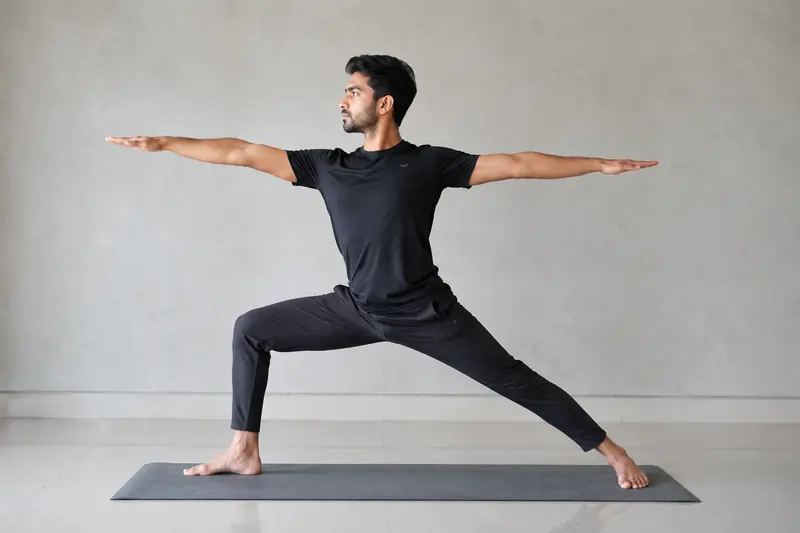
- Stand with feet apart.
- Turn right foot outwards and bend knee.
- Extend both arms to the sides until they are shoulder height.
- Take a straight left leg and keep torso upright.
- Look over right hand and hold for between 15-30 seconds.
- Repeat on the other side.
Vrikshasana (Tree pose)
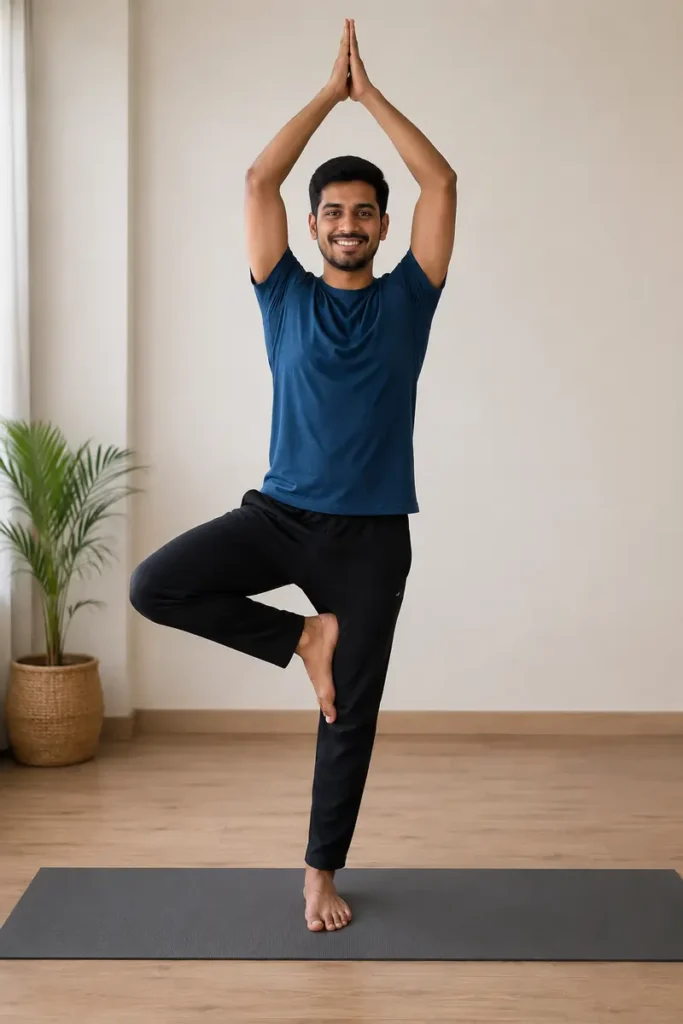
- Stand tall with your feet together.
- Transfer your weight to your left foot.
- Cross your right foot over the inside of your left leg (avoiding the knee).
- Place your hands in front of your body and grasp them.
- Keep your back straight and steady.
- Hold in this position for 15-30 seconds, then repeat on the other side.
Trikonasana (Triangle Pose)
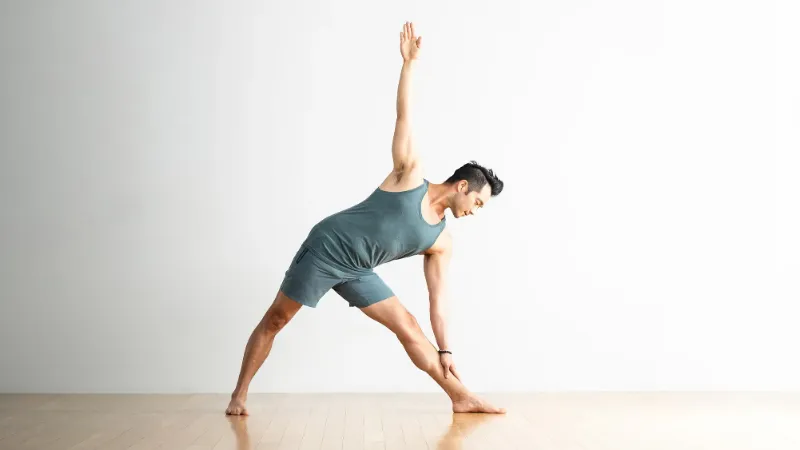
- Feet wide apart.
- With your arms extended to the sides, turn your right foot outward.
- Lean to the right at the hips.
- Rest your right hand on your shin or ankle.
- Lift your left arm up towards the ceiling and raise your gaze if you can.
- Hold this position for between 15-30 seconds, then repeat on the other side.
Marjaryasana-Bitilasana(Cat-Cow Pose)
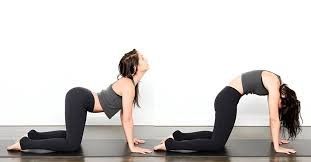
- Start in a four-point position, with your wrists directly below your shoulders and your knees directly below your hips.
- Inhale and arch your back slightly. Lift your chest up and gaze slightly upwards (Cow pose).
- Exhale and round your back. Tuck your chin to your chest and draw your abdomen in (Cat pose).
- Move slowly into each pose with control of your breathing.
- Repeat for 8-10 repetitions.
Setu Bandhasana (Bridge Pose)
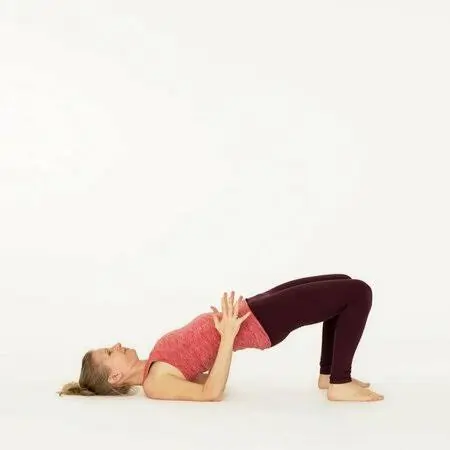
- With your feet flat on the floor and your knees bent, lie on your back.
- Make sure your arms are at your sides, palms down.
- Raise your hips slowly while pressing your feet onto the ground.
- Maintain your thighs parallel and your shoulders on the ground.
- Hold for between 15 and 30 seconds, breathing normally.
- Slowly lower your hips and relax.
Anjaneyasana (Low Lunge Pose)
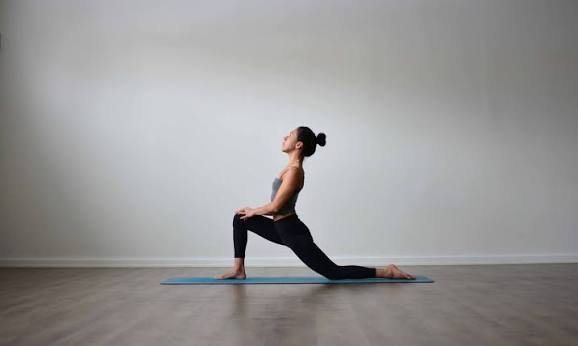
- Kneel down and place your right foot forward.
- Ensure that your right knee is at a 90-degree angle and your left knee is on the floor.
- Leaning forward slightly using your hips will help stretch your left hip flexor.
- Straighten your back and raise your arms over your head.
- Hold this position for 15-30 seconds whilst breathing normally.
- Return to the start position and repeat on the other side.
Utkatasana (Chair Pose)
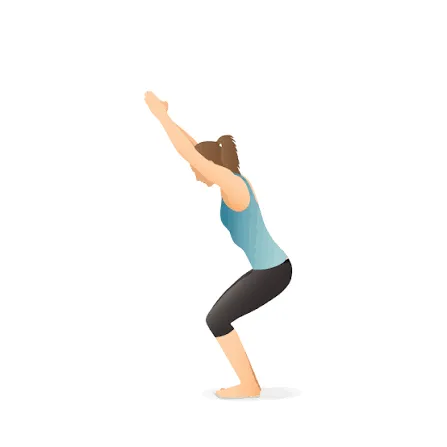
- Begin by standing upright with your feet close together and your arms resting naturally at your sides.
- Inhale and raise your arms above your head with your palms facing each other.
- Exhale and bend your knees as you sink into an imaginary chair.
- Maintain an upright posture with your chest open, spine aligned, and body weight balanced evenly between both feet.
- Hold for 15-30 seconds and breathe naturally.
- Inhale and push through your legs to return to the starting position.
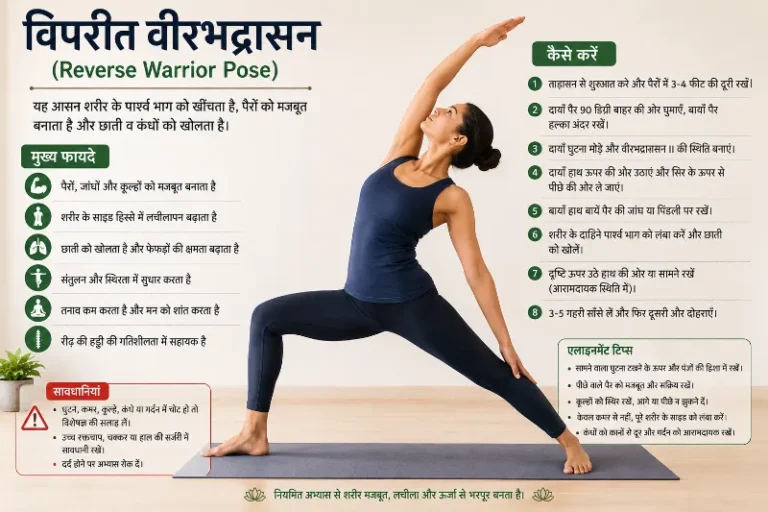
Utthita Parsvakonasana (Extended Side Angle Pose)
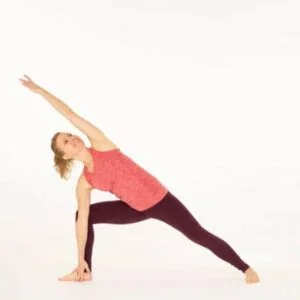
- Stand with legs wide apart and arms stretched out.
- Turn your right foot so that your toes point outwards. Bend your right leg so that your knee lines up with your ankle.
- Bend forwards so that your torso is leaning to the right. Place your right hand on your thigh/ankle or yoga block.
- Raise your left arm up towards the sky. Ensure your left arm forms a straight line from your left foot to your fingertips.
- Ensure that your chest remains open, your back is long, and your eyes are looking up if possible.
- Hold for 15-30 seconds, breathing evenly.
- Return to start position and repeat on other side.
Bhujangasana (Cobra Pose)
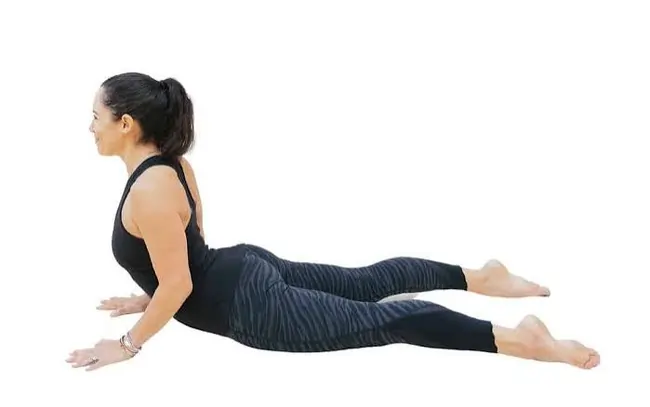
- Extend your legs and gently press the tops of your feet into the floor while lying face down on the mat. Put the mat to your forehead.
- Spread your fingers widely, place your palms flat beneath your shoulders, and keep your elbows tight to your body.
- Activate your buttock muscles lightly while firmly grounding your feet and engaging your thighs and legs against the mat.
- Take a breath, raise your chest using your back muscles, and press your pubic bone down.
- Expand your collarbones and raise your sternum forward by rolling your shoulders back and down.
- Keeping your elbows soft and your eyes gently forward or slightly upward, straighten your arms as pleasantly as you can.
- If you are a beginner, hold your breath steadily for 15 to 30 seconds; if you are an expert, hold it for 1 to 3 minutes.
- Breathe out, lower your forehead, shoulders, and chest to the mat softly, and tilt your head to one side to ease your neck.
Safety Precautions:
- Warm Up: Before practicing yoga, warm up your muscles by doing a few simple exercises.
- Keep Your Posture Correct: Ensure that you are keeping good form throughout to avoid putting any unnecessary strain on your muscles and joints.
- Do not overstretch: only do as much as your body can comfortably do.
- Breathe normally: breathe slowly during each position.
- Start simple: Begin with simple yoga positions and gradually progress to harder positions as you increase your flexibility.
Conclusion
Yoga encompasses both physical and mental aspects of sports rehabilitation. There is clinical evidence to support the effectiveness of yoga in increasing flexibility (range of movement), strength, balance, pain management, and overall wellbeing. Including yoga as an adjunct to rehabilitation will aid athletes to recover and improve performance as sports medicine develops.
Further research should be completed to give more accurate recommendations on how yoga can be used within sports rehabilitation. This will help to identify the most effective time, frequency, and type of yoga intervention for a variety of sports-related injuries.
FAQs:
Does yoga prevent sports injuries?
This is an issue in sports such as baseball pitching, tennis, and golf. However, yoga can help you regain balance within your body, so this reduces the risk of accidents.
How does yoga help you in sports?
Although flexibility is one of yoga’s many advantages, it’s not the only one. In order to enhance performance and lower the risk of injury, yoga for athletes stresses mobility, joint stability, balance, and recovery. Yoga enhances power production, breathing efficiency, movement mechanics, and mental focus when incorporated into a training program.
Is yoga better than running?
When it comes to maintaining a heart-healthy regimen, Aeshita Dwivedi, MD, FACC, says there is no one-size-fits-all approach and that your mobility influences the exercises you choose. Research indicates that yoga is a better activity than running for flexibility.
Which yoga poses should be avoided?
Pulls or strains in the neck, spine, low back, or hamstrings are among the most frequent injuries sustained during yoga. The most dangerous yoga poses are shoulder stands, backbends like locust or wheel pose, headstands or handstands (inversions), and occasionally bending too much to one side.
Why is yoga better than exercise?
Your entire body, both inwardly and outwardly, benefits from yoga.
It can strengthen your cardiovascular system and is a fantastic way to cleanse your body. And all the while building more powerful muscles. The sole goals of a gym workout are to increase cardio and strengthen muscles.
References:
- Sturman, C., & Sturman, C. (2025, October 6). Yoga for Injury Prevention & Recovery | Improve Flexibility & Strength. Pure Sports Medicine. https://puresportsmed.com/blog/posts/yoga-for-injury-prevention-recovery-improve-flexibility-strength/
- Singh, K. (2025). The role of yoga in injury prevention for athletes. Sports Science & Health Advances, 3(1(Spl)), 454–459. https://doi.org/10.60081/ssha.3.1(spl).2025.454-459
- Krishnamurthy, M. N. (2023). Yoga as part of sports medicine and rehabilitation. International Journal of Yoga, 16(2), 61–63. https://doi.org/10.4103/ijoy.ijoy_212_23