Yoga for SI Joint Dysfunction: Reduce Pain and Restore Mobility
Introduction:
Sacroiliac (SI) joint pain can be reduced with static and dynamic yoga poses that strengthen and stabilize your lower back, hip, and core muscles, increase hip and spinal flexibility, and help prevent future discomfort.
Benefits of Yoga for SI Joint Dysfunction
SI joint dysfunction may be caused by improper joint mobility (SI joint dysfunction) or inflammation within the joint (sacroiliitis). These disorders may eventually cause the muscles around the SI joint to weaken or become unbalanced, which can put more strain on the joint and aggravate symptoms. Yoga can help improve joint stability and alignment by strengthening and lengthening these muscles, which may lessen discomfort and prevent future damage.
Stretching and strengthening the lower back muscles, deep gluteal muscles (such as the piriformis muscle), and hip extensor muscles (such as the gluteus maximus and the hamstrings) are the main goals of yoga for SI joint discomfort.
Increasing the strength and flexibility of these muscle groups may help improve body mechanics and general posture, which will further lessen the stress on the SI joint.
- Stress and SI joint discomfort are both relieved by yoga.
- Strengthens the muscles surrounding the hip and pelvic bones.
- Improves joint health and flexibility.
- Bridge poses ease tension and discomfort.
- Improves circulation and reduces irritation.
- Increases awareness of one’s body and reduces discomfort.
- Reduces hip and pelvic bone stiffness.
- Decreases pain after increasing movement.
How Yoga Helps SI Joint Dysfunction
Stretching is a natural reaction when something is painful, but excessive mobility—rather than too little—often irritates the SI joint. Three key components of beneficial yoga for the SI joint are moving both sides of the body symmetrically, avoiding severe rotation or single-leg loading, which may shear the joint, and stabilizing the pelvis using core and glute strength. Strengthening the muscles surrounding the pelvis gives the joint the support it needs to stop protecting and grinding.
The protective muscular tension that accumulates around an irritable joint is also relieved by gentle, controlled positions.
The protective muscular tension that accumulates around an irritable joint is also relieved by gentle, controlled positions. SI joint pain is frequently accompanied by tight hip rotators and an overworked lower back, so a balanced exercise that keeps the pelvis level while gently mobilizing the hips will help reduce the pulling forces on the joint.
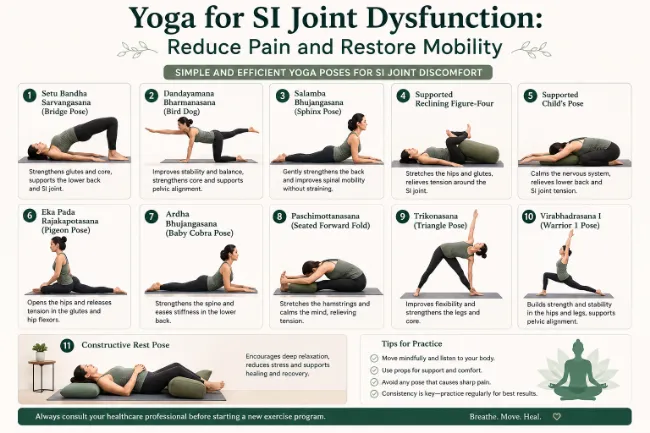
Simple and efficient yoga poses for SI joint dysfunction
Setu Bandhasana (Bridge Pose)
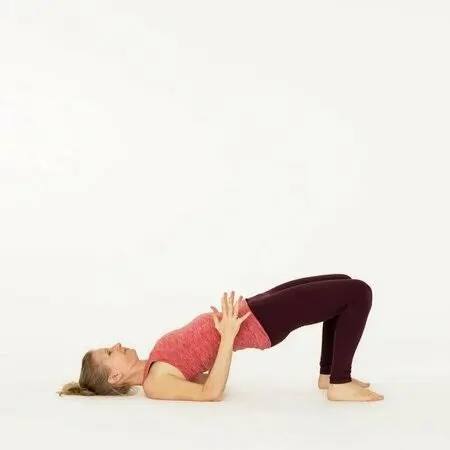
- Start by lying on your back on the ground with your knees bent and your feet flat.
- Maintain the proper alignment of your spine, shoulders, and neck.
- Put your arms by your sides after that.
- Contract your abdomen, then push from your heels to elevate your hips.
- Once more, maintain this posture for a few deep belly breaths, inhaling through your nose and exhaling through your mouth.
Dandayamana Bharmanasana (Bird Dog)
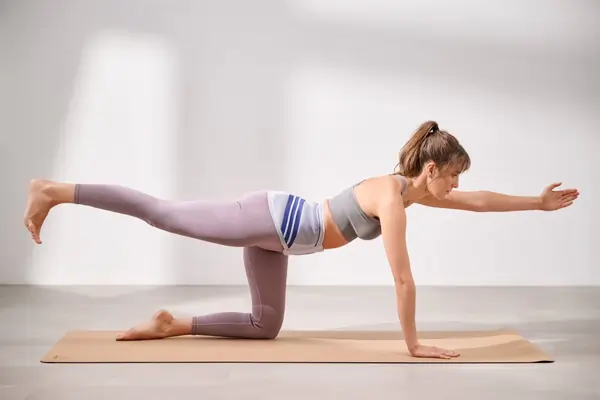
- Start on your hands and knees (tabletop position).
- Maintain your knees behind your hips and your hands under your shoulders.
- Tighten your core and keep your back neutral.
- Stretch your left leg backward and your right arm forward.
- Hold for 3 to 5 seconds.
- Return to the starting position.
- Repeat with the left arm and right leg.
- Perform 8–10 repetitions on each side.
Salamba Bhujangasana (Sphinx Pose)
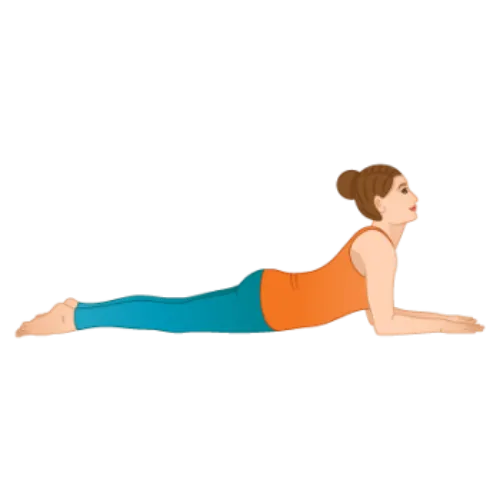
- Extend your legs behind you while lying on your stomach.
- Place your elbows directly under your shoulders.
- Rest your forearms flat on the floor, palms facing down.
- Gently lift your chest while keeping your pelvis on the floor.
- Relax your shoulders away from your ears.
- Keep your neck neutral and look forward.
- Breathe slowly and hold for 30–60 seconds.
Supported Reclining Figure-Four
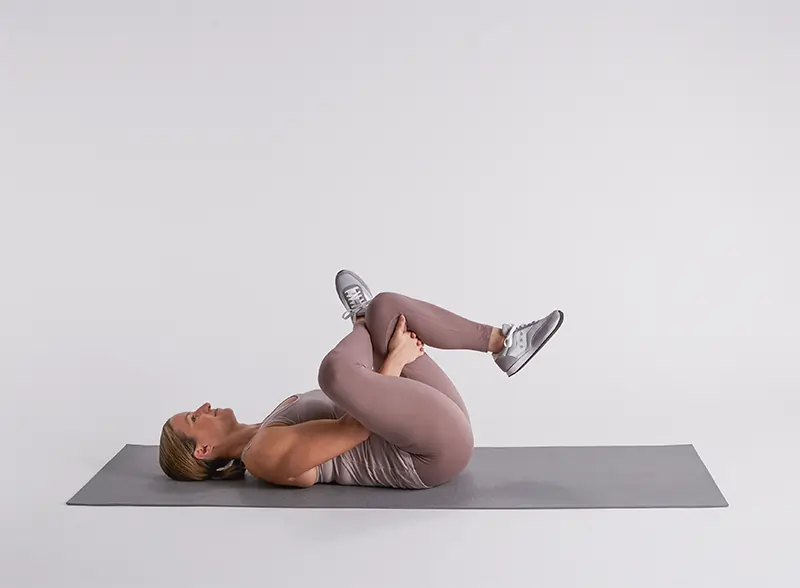
- Bend both knees and place your feet flat while lying on your back.
- Make a “4” shape by crossing one ankle over the other thigh.
- Place a pillow or cushion under the supporting leg if needed.
- Keep your head, neck, and shoulders relaxed.
- Gently hold the stretch without forcing the knee down.
- Breathe slowly and relax for 30–60 seconds.
- Repeat on the other side.
Supported Child’s Pose
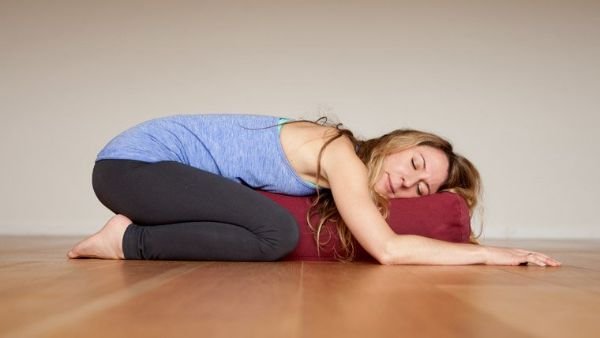
- Sit on the floor with your knees apart and big toes touching.
- Keep the pillow in front of you.
- Sit your hips back toward your heels.
- Fold your torso forward onto the pillow/bolster.
- Rest your forehead on the support.
- Stretch your arms out in front of you or place them next to your body.
- Breathe slowly and relax for 1–5 minutes.
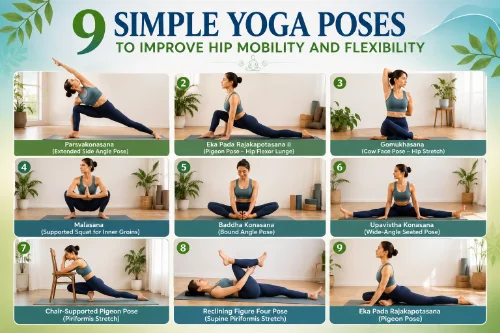
Eka Pada Rajakapotasana (Pigeon pose)
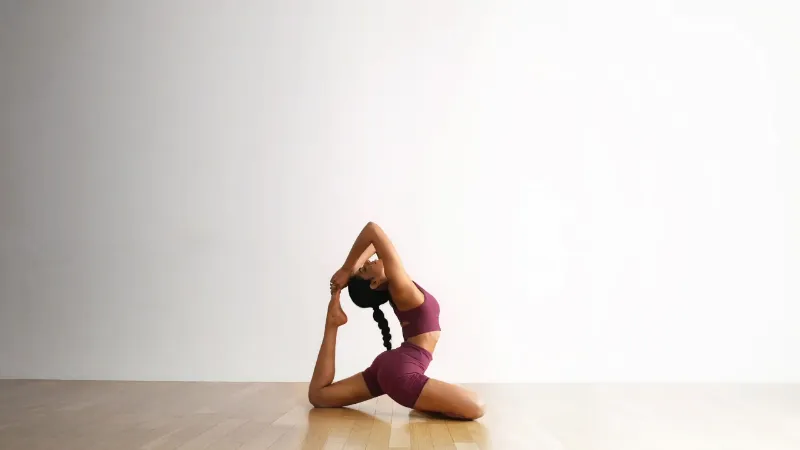
- On a yoga mat, start in a straight-arm plank posture, keeping your head, shoulders, hips, and toes aligned.
- With one leg bent in front of you, bring your knee to your elbow and your ankle to your hip on the other side.
- Slowly stretch your hands in front of you while keeping your head down and your upper body resting on your bent knee.
- Hold this posture for 30 to 60 seconds.
- Inhale through your nose and exhale through your mouth as you take many deep belly breaths.
- Similarly, repeat the exercise on the opposite side after returning to the starting position.
Ardha Bhujangasana (Baby Cobra Pose)
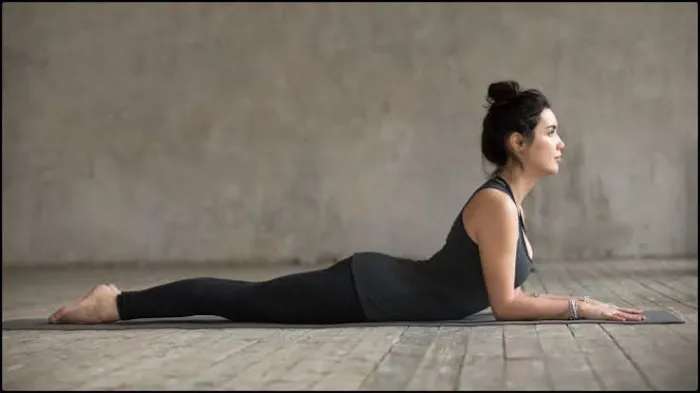
- Maintaining proper alignment from your head to your hips and legs, lie on your stomach with your legs straight and your feet shoulder-width apart.
- Then place both hands on the ground while bending your elbows.
- Using your hands for support, slowly raise your mid-back off the floor by contracting your abdominal muscles.
- Take several deep stomach breaths while holding this posture, inhaling through your nose and exhaling through your mouth.
Paschimottanasana (Seated Forward Fold)
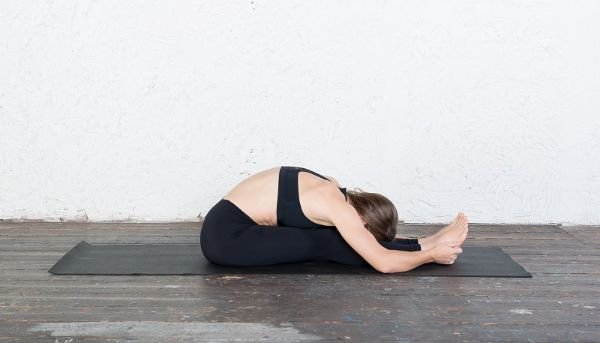
- Basically, start the exercise by crossing your legs while sitting upright on the floor.
- Keep your head, shoulders, and hips in proper position.
- Tighten your abdominal muscles after that.
- Bend your upper body forward by hinging at the hips, keeping your hands on the ground.
- Additionally, maintain the posture for a few seconds.
- Repeat the exercise five times after returning to the starting position.
Trikonasana (Triangle pose)
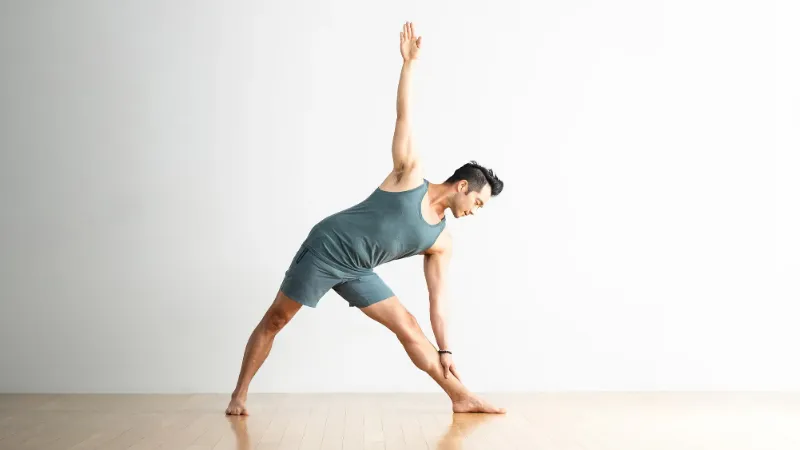
- Basically, start by standing up straight and placing your feet far wider apart than shoulder-width.
- Keep your head, shoulders, and hips in proper position.
- Raise your arms to shoulder level and extend them to the side.
- Make a 90-degree turn with your left foot.
- Work the muscles in your core.
- Next, slowly bend your upper body to the left while extending your right hand above and reaching your left hand to your shin.
- Additionally, maintain the posture for a few seconds.
- After you have settled down, do it again on the other side.
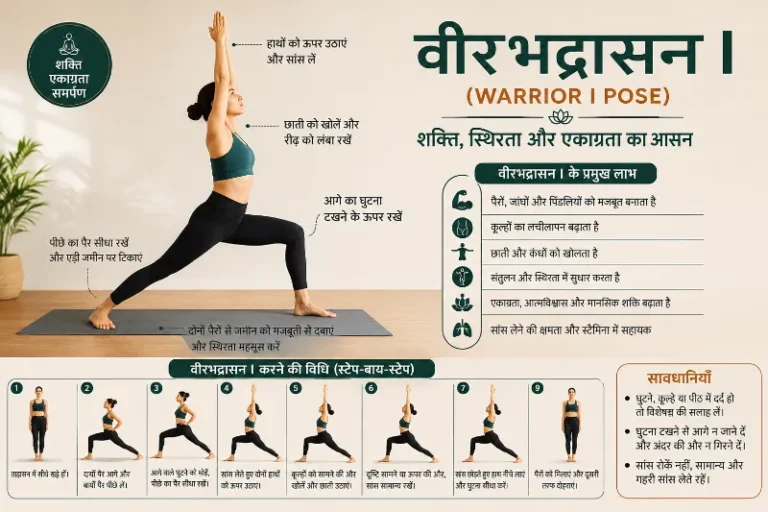
Virabhadrasana I (Warrior 1 Pose)
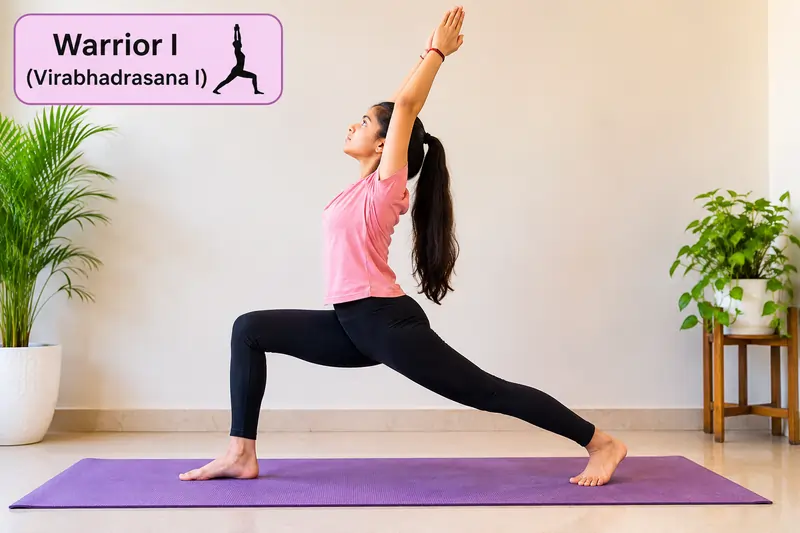
- First, stand up straight and place your feet shoulder-width apart.
- Throughout, make sure your head, shoulders, hips, and legs are all in the right position.
- Next, contract your core muscles, take a large step back with one foot, and raise both arms above your head while bending your front leg forward.
- For a few breaths, maintain the posture.
- Additionally, use your arms as support to lift yourself back up to an upright standing posture.
- Repeat the motion on the other side once more.
Constructive Rest Pose
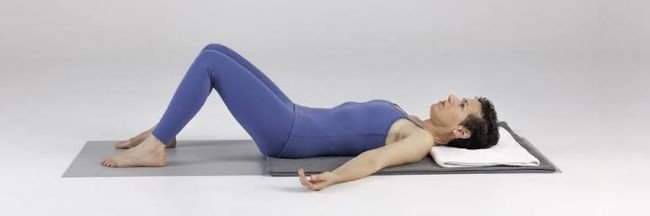
- On a firm surface, lie flat on your back.
- Bend both knees.
- Keep both feet hip-width apart.
- Place your hands on your stomach or lower your arms to your sides.
- Breathe slowly and relax for 5–10 minutes.
Precautions While Performing Yoga
- See your physician first.
- Start with simple stretches, then progress to more challenging ones.
- Avoid forcing positions.
- Keep your body positioned correctly.
- For more support, use objects.
- Make sure to breathe deeply.
- Don’t overstretch.
- Rest frequently and practice regularly.
- Before and after, drink water.
FAQs:
Does yoga help SI joint dysfunction?
Yes, if yoga focuses on equal alignment, core strengthening, and gentle stabilization, it can help with sacroiliac (SI) joint problems. Deep stretches or improper practice, however, may worsen the instability. On Reddit, opinions on certain hip openers and floor twists are divided; some people find them to be therapeutic, while others report greater discomfort.
How to permanently fix SI joint pain?
A long-term strategy centered on physical therapy, core and glute strengthening, and surgical treatments if conservative care is unsuccessful is necessary to permanently treat sacroiliac (SI) joint discomfort. While “permanent solutions” depend on the underlying cause, surgical stabilization or focused rehabilitation provides stability and long-lasting comfort.
What exercises to avoid with SI joint dysfunction?
Exercises like lunges, hard classic squats, and complete sit-ups that involve asymmetrical leg movement, significant spine rotation, and high impact should be avoided if you have sacroiliac (SI) joint problems.
What helps SI dysfunction?
The first steps in treating sacroiliac (SI) joint problems include rest, heat or ice, and over-the-counter anti-inflammatory medications like ibuprofen. Treatments include targeted joint injections, specific pelvic belts, and physical therapy if the discomfort persists.
References:
- Holtzman, S., & Beggs, R. T. (2013). Yoga for Chronic Low Back Pain: A Meta‐Analysis of Randomized Controlled Trials. Pain Research and Management, 18(5), 267–272. https://doi.org/10.1155/2013/105919
- Miranda, H. (2017). Healing Through Dance and Movement with Migrant Farm Workers. In the Brock University Digital Repository (Brock University). http://hdl.handle.net/10464/12962